
Real-time perception
Onboard vision models must process data quickly within limited compute budgets, even without connectivity.
Drones & Defense
Drones and defense systems increasingly rely on onboard AI, but compute, power, weight and thermal constraints limit their capabilities.
As models become more advanced, engineering teams must deliver more functionality within these hardware constraints.
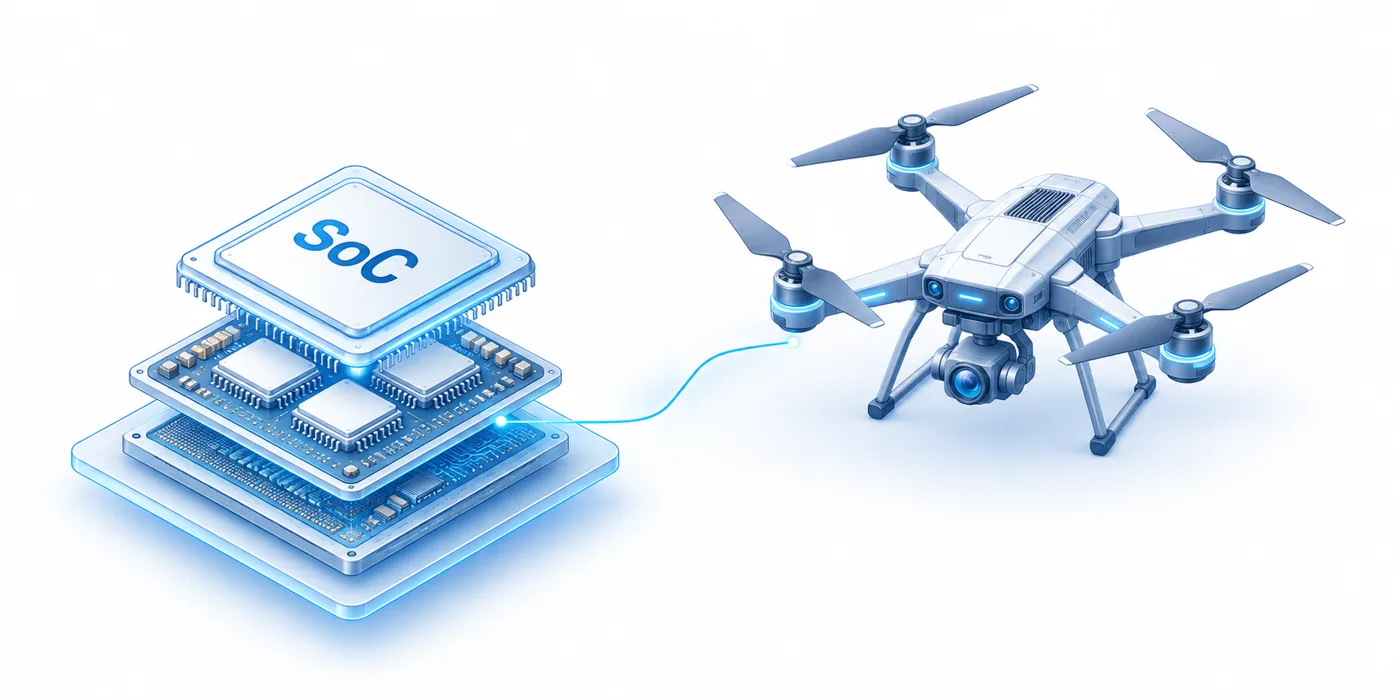
On-device AI challenges
Onboard vision models must process data quickly within limited compute budgets, even without connectivity.
More powerful hardware can increase power consumption, cooling requirements and weight — all critical considerations for airborne systems.
Every additional AI workload competes for the same processing resources and memory.
The product decisions
THE EXISTING CHIP
Optimize your vision models to improve inference performance and make room for additional AI capabilities on your existing hardware.
THE NEXT CHIP
A more powerful chip can introduce additional power, weight and thermal requirements. The right chip fits both your models and your product constraints.
Why it matters at scale
Hardware decisions affect the design, power requirements and unit economics of the entire product.
Optimizing your existing SoC or identifying a better alternative can help avoid unnecessary hardware upgrades and integration work.
The next hardware decision
The embedded AI hardware market continues to evolve, offering new combinations of processing power, energy efficiency and form factors.
But specifications alone cannot tell you how your model will perform. Finding the right chip requires real hardware measurements and engineering expertise.