
Multiple AI workloads
Object detection, segmentation and tracking compete for processing time and memory on the same embedded hardware.
Robotics
Robots increasingly rely on onboard AI for perception, object recognition, navigation and interaction with their surroundings.
As new AI features compete for limited processing resources, teams must balance performance, functionality and hardware cost.
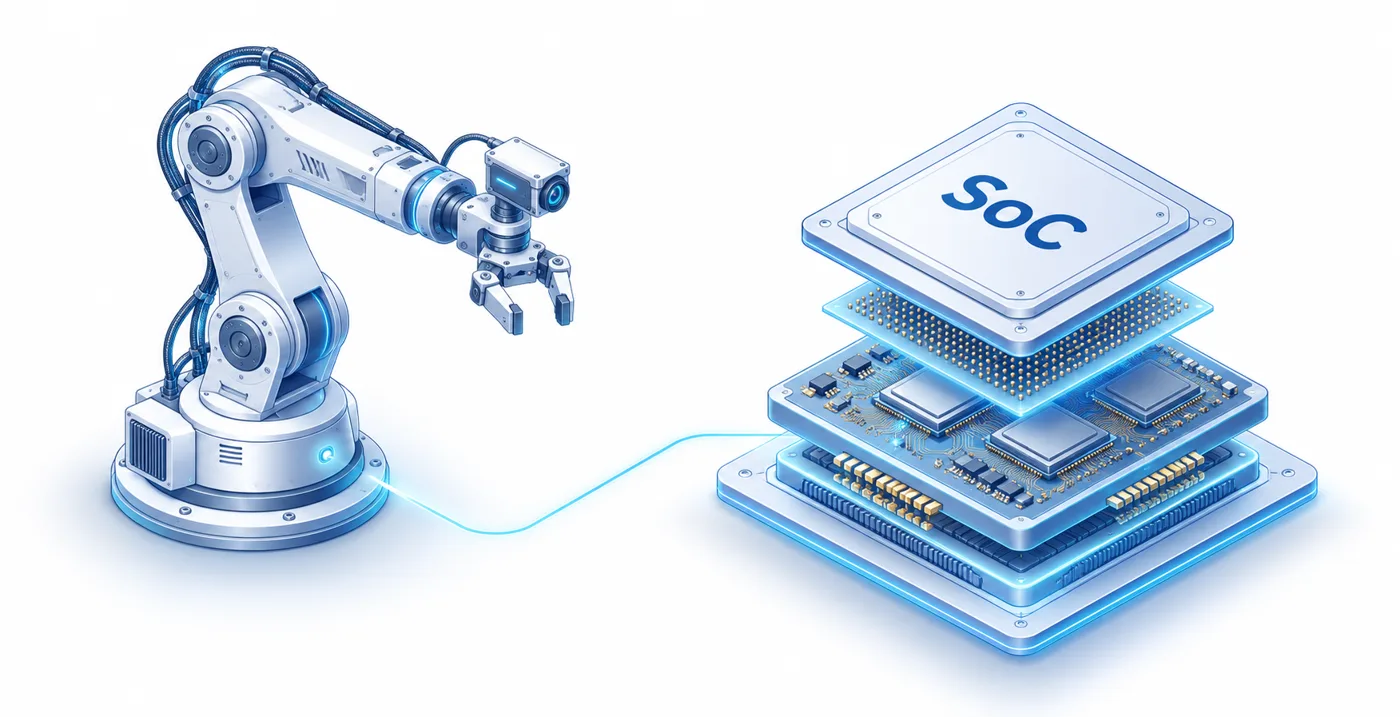
On-device AI challenges
Object detection, segmentation and tracking compete for processing time and memory on the same embedded hardware.
Robots must process visual information within strict latency requirements while maintaining model accuracy.
Adding new capabilities to an existing robot can require months of optimization or an expensive hardware upgrade.
The product decisions
THE EXISTING CHIP
Optimize your vision models to improve inference speed, free up compute and make room for additional features on the same SoC.
THE NEXT CHIP
A higher-performance SoC may offer more headroom, but also increase cost and power consumption. The right hardware fit starts with understanding how your models perform.
The goal isn't necessarily more compute. It's getting more value from the compute available.
Why it matters at scale
An unnecessarily expensive SoC increases the manufacturing cost of every robot shipped.
Optimizing models for existing hardware or identifying a lower-cost alternative can improve product margins while meeting AI performance requirements.
The next hardware decision
New embedded processors offer robotics developers a growing range of architectures, accelerators and software toolchains.
The most powerful chip on paper isn't necessarily the best chip for your robot. Understanding real model performance helps teams make better hardware decisions earlier.